

Cave Diving Safety
Jill Heinerth
This week, reports emerged from the Maldives of a tragic accident in which five Italian divers lost their lives while exploring an underwater cave system in the Vaavu Atoll. At the time of writing, there is still very little reliable information available about exactly what happened. There will be time later to examine the facts carefully and learn from the incident once the investigation is complete. But the tragedy serves as an important reminder about the unique risks of cave diving and the training required to safely enter overhead environments.
A cave becomes dangerous not simply because it is underwater, but because a diver cannot make a direct ascent to the surface in an emergency. The naturally lit entrance area of a cave is known as the cavern zone. In this area, divers can still see daylight and maintain a direct route to open water. Cavern dives are generally shallow, with moderate depths, generally less than 20m, and a visible exit at all times. Beyond that zone, however, the environment changes completely. Darkness, distance, navigation, gas management, and emergency procedures all require highly specialized training, equipment, and techniques specific to cave diving.
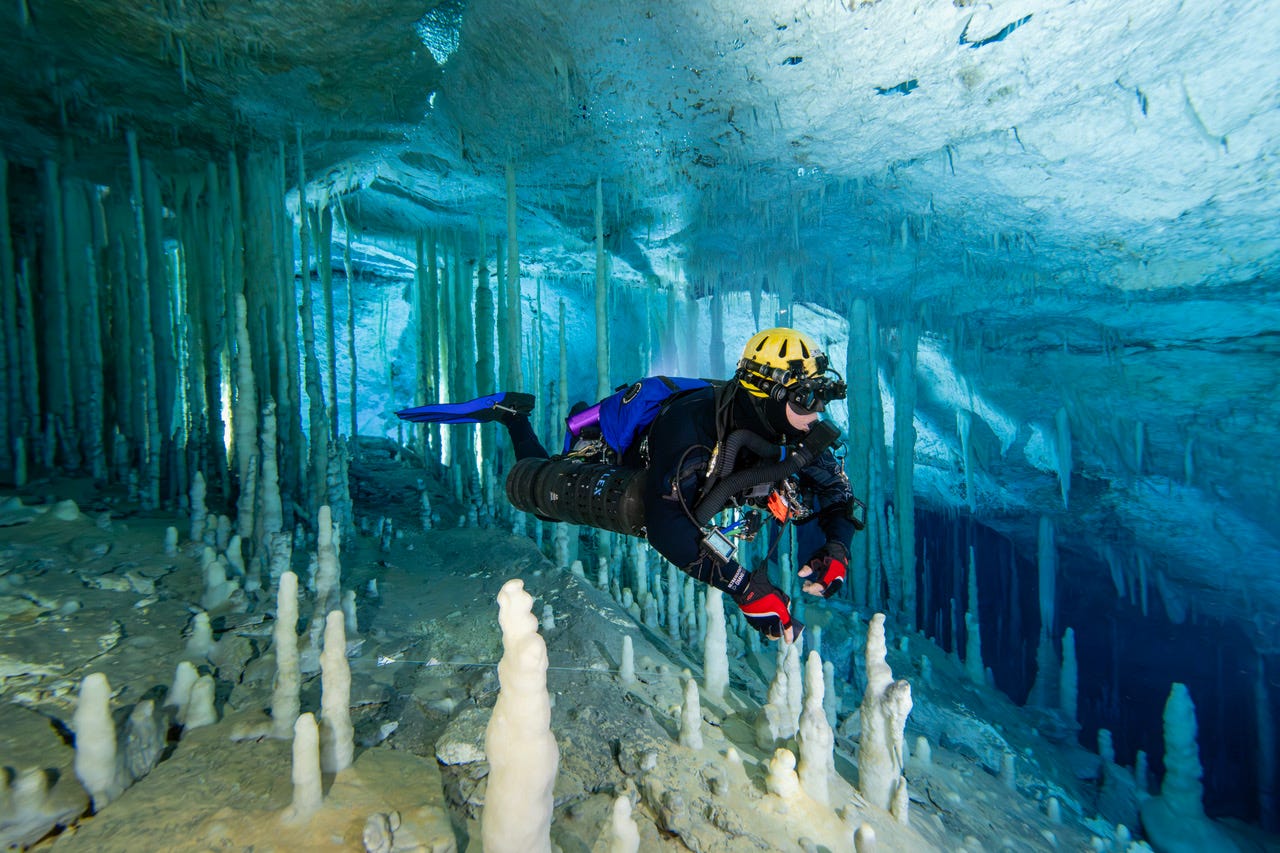
Many divers enter cave environments without realizing it. If you have ever followed a guide through a dark reef tunnel that opened onto a wall, drifted through a cenote passage until daylight faded behind you, or explored a cavern at night, you have experienced some form of cave diving. The danger is not always obvious because these places can appear calm, clear, and inviting.
Historically, the greatest contributing factor in cave diving fatalities has been inadequate training for the environment. Many victims were experienced open-water divers, instructors, or technical divers who simply lacked cave-specific skills and redundant gear. The crystal-clear water of caves can create a false sense of security, but without proper training it is easy to become disoriented, lose the exit, stir up silt that eliminates visibility, or fail to reserve enough breathing gas for a safe exit.
For trained cave divers, the risks often shift toward exceeding personal limits, deep diving, and complacency. A large percentage of cave diving fatalities occur at depths greater than 45 metres/150 feet, where narcosis, inappropriate gas choices, time pressure, and equipment failures can quickly become fatal. Deep cave dives demand extensive training, disciplined preparation, and the experience to recognize when conditions are no longer safe.
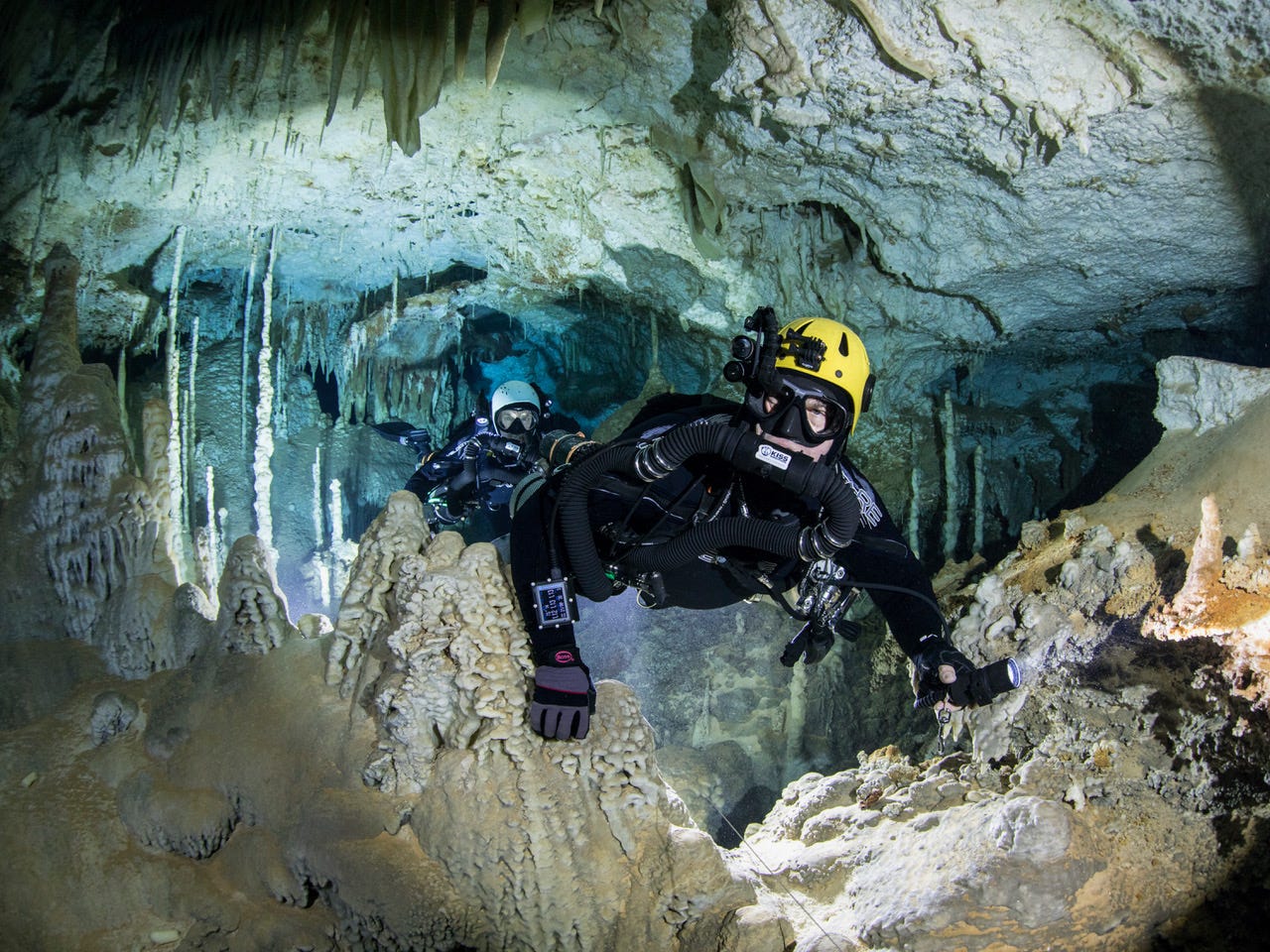
The most important lesson is simple: never enter a cave environment without proper training, redundant equipment, and the confidence to turn the dive at any moment. No guide, instructor, or peer group can assume responsibility for your safety. Ultimately, every diver must make their own decisions and be willing to abort the dive when something does not feel right.
Caves are beautiful places, but they are utterly unforgiving of mistakes.
UNDER THIN ICE
It may be surprising to learn that I do not always have easy access to the films I have either shot or been in. There are geofences and rights issues that make it difficult to share the work that I do not fully independently own. That said, I just learned that a documentary I am very proud of is available on YouTube. This is the full length international version of Under Thin Ice. The short version of the film was broadcast on Canada’s The Nature of Things, but this one, at twice the length was made for the European market. Have a look:

The Toxic Manosphere
Robert McClellan
Many years ago I started a project called “Man Camp.” The concept was to produce a book and accompanying videos with tips and advice for young guys to become good, solid men. It included simple guides about how to cook a nice dinner for yourself and others, what to wear on a date, how to fix a flat tire, how to handle bullies, and so on...
The creative gods sent other opportunities my way and “Man Camp” never quite got off the ground.
I mention this because Jill and I recently watched the Netflix documentary film “Louis Theroux: Inside The Manosphere.” In it, Theroux explores the online ecosystem of content creators advocating for hyper-masculinity, “red-pill” philosophy and Neanderthal views on gender roles.
This is Louis Theroux’s on-screen trademark - in many of his films and television programs, he explores marginal and often controversial subjects by embedding himself in the cultures and giving his subjects room to reveal more about themselves than they may have intended. He’s explored subjects like the Ku Klux Klan, Israeli Kibbutz Settlers, Scientology, the disgraced BBC presenter Jimmy Saville, and dozens of other hot-button topics.
While watching “Inside The Manosphere” I had strong opinions about these content creators and podcasters. I did not expect to be so affected by this film, but at times, I found myself yelling at the screen over the disturbing and sociopathic behavior of these “influencers” as they live streamed their mean-spirited escapades for clicks and clout. Jill said it was eye-opening, but I could not just watch it objectively - overall, I felt anger and disappointment in the male gender.
Jill, on the other hand, pointed out that most of the young men profiled in the film lacked a positive male role model as they were growing up. Some were physically and psychologically abused as children, and as the saying goes “hurt people hurt people.” There wasn’t a solid older guy present to help them through the challenges that most young men encounter in adolescence. They simply lacked any connection with a fully formed, confident, and empathetic man who could be a touchstone upon which they could model respectful behavior.
I was very fortunate to have had several men in my life - from my own father to some grizzled old Navy Chiefs, who taught me the value of being a gentleman, at all costs. I don’t know if “Man Camp” could have offset the negativity of the online “Manosphere,” but I do know that the way I, and my chosen male friends and colleagues conduct ourselves is mirrored by impressionable young guys. It is our duty to help mold young men into valuable members of the future society in which they can grow and prosper.
I’d recommend watching “Louis Theroux: Inside The Manosphere” to educate yourself and help sway a younger person from drinking the toxic Kool-Aid offered by these online con men and grifters.
We can (finally!) say with confidence that Spring has arrived here in Ontario, Canada.

Our little world along the river has transformed from ice and snow to the promising greenery of renewal.

Thank you so much for your amazing work. Both of your calm and collected thoughts on current events are such welcome reading. Keep up the wonderful work, it is much appreciated!
Although not a cave diver or even aspire to be one, I have been following the tragic news and I hope as facts emerge we have a clearer picture of what happened because it sounds like there are a lot of speculations!
Thank you for the links, I look forward to seeing both even though I am sure I will end up at least screaming at my tv on the second one!
I got to know elephants and their social interactions and the bulls who cause havoc are usually young bulls who didn’t have the benefit of older ones to be their role models because they were killed for their ivory! So now there is a major problem with human-wildlife conflict because of their behavior! Sounds like our young men are not that different from rogue young bulls! They run around unable to control their testosterone and think they can do whatever they want!