

Scuba Diving Safety and Risk
Jill Heinerth
Diving Safety Begins With Understanding Risk Perception
Scuba diving is generally safe if you’re well-trained, plan ahead, and use good judgment. However, accidents often happen because of how people recognize and respond to risks.
Researchers who study disasters and health threats have found that people rely on two kinds of thinking when assessing danger: intuitive and deliberative. Intuitive thinking is fast and automatic, representing our “gut reaction.” It evolved to protect us from obvious threats, like bad smells or bitter tastes. Deliberative thinking, on the other hand, is slow and requires more effort. It’s what we use when weighing evidence, comparing options, and planning ahead.
This difference is important in diving. Our gut instincts often miss underwater dangers like narcosis, decompression stress, minor equipment problems, or changing conditions. These risks don’t necessarily feel urgent, so it’s easy to ignore them when things seem okay. That’s why using checklists, planning dives, and formally assessing risks matter, They help us think things through instead of relying on instinct.
We all see risk differently. Studies show that people who believe a threat is serious actually process danger differently than those who don’t. For example, one diver might be very careful about depth limits and surface intervals, while another with the same training might not worry about them at all.
Social influence makes things even more complicated. We often copy the attitudes of the people we dive with. If a group regularly skips safety stops or pushes limits, that behavior can start to feel normal, even if it goes against best practices or training guidelines.
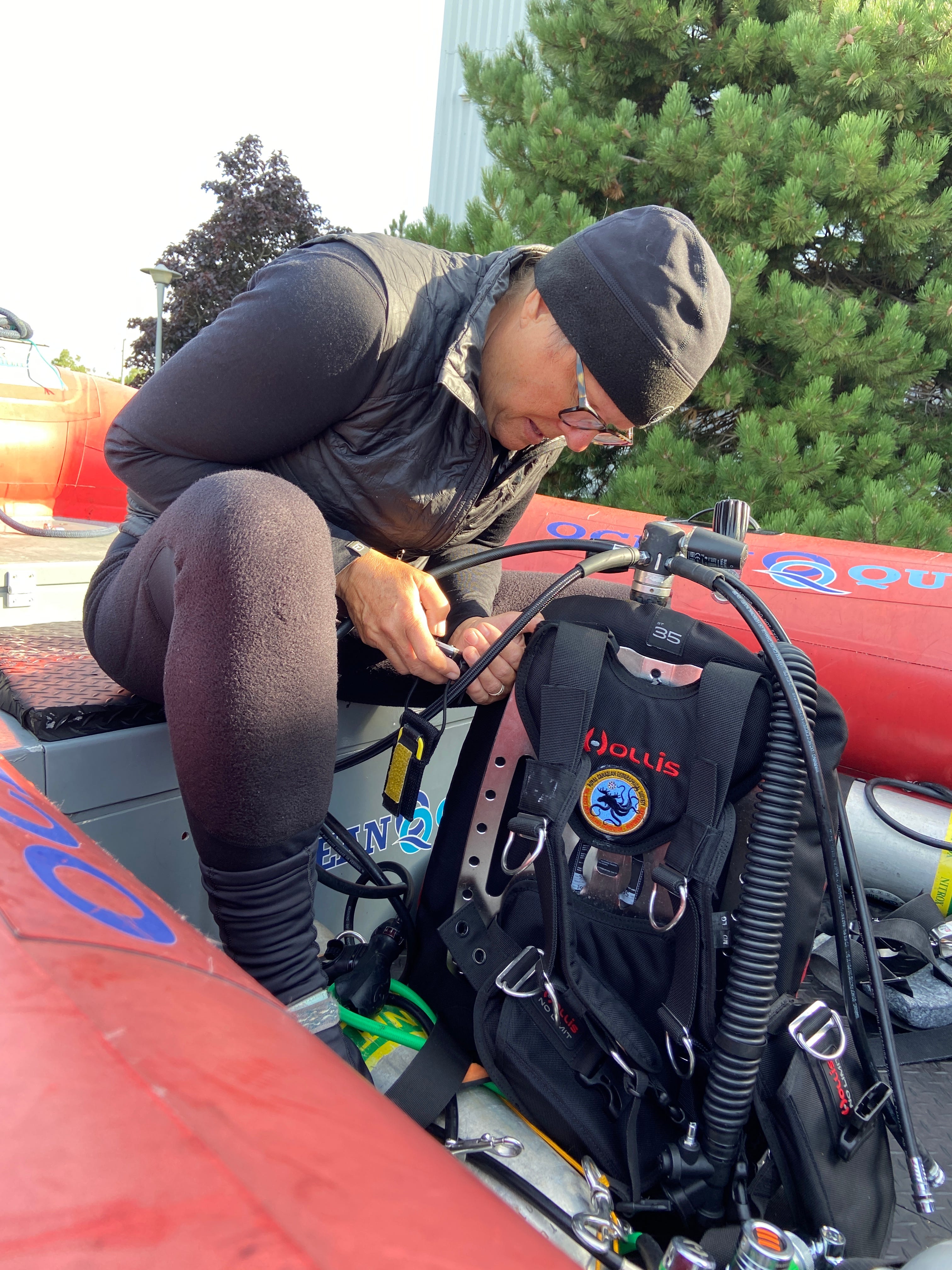
Above: Jill is well-known as the “Checklist Queen”
So, what can divers do to stay safe?
• Plan deliberately. Use written dive plans, gas calculations, and agreed-upon turn pressures.
• Add safety margins to your dives. Using conservative profiles helps make up for human error and unexpected problems.
• Promote a safety culture. Dive with buddies and operators who respect limits, and set a good example by following your own safety procedures and pre-dive checks. If nobody wants to walk through a thorough safety check with you, then make your own performative check while voicing each step out loud.
• Take a moment before moving forward. If you feel pressured by convenience or the group, stop and reassess your decision.
There’s no way to remove all risk from diving. But if we understand that our brains often miss unfamiliar dangers and follow the crowd, we can build habits and systems that help keep us safe. In the end, good risk assessment is about giving yourself the best chance to enjoy safe diving for years to come.
Jill is off on an ice diving project this week. She and teammates from Freeze the Future - https://www.freezethefuture.com
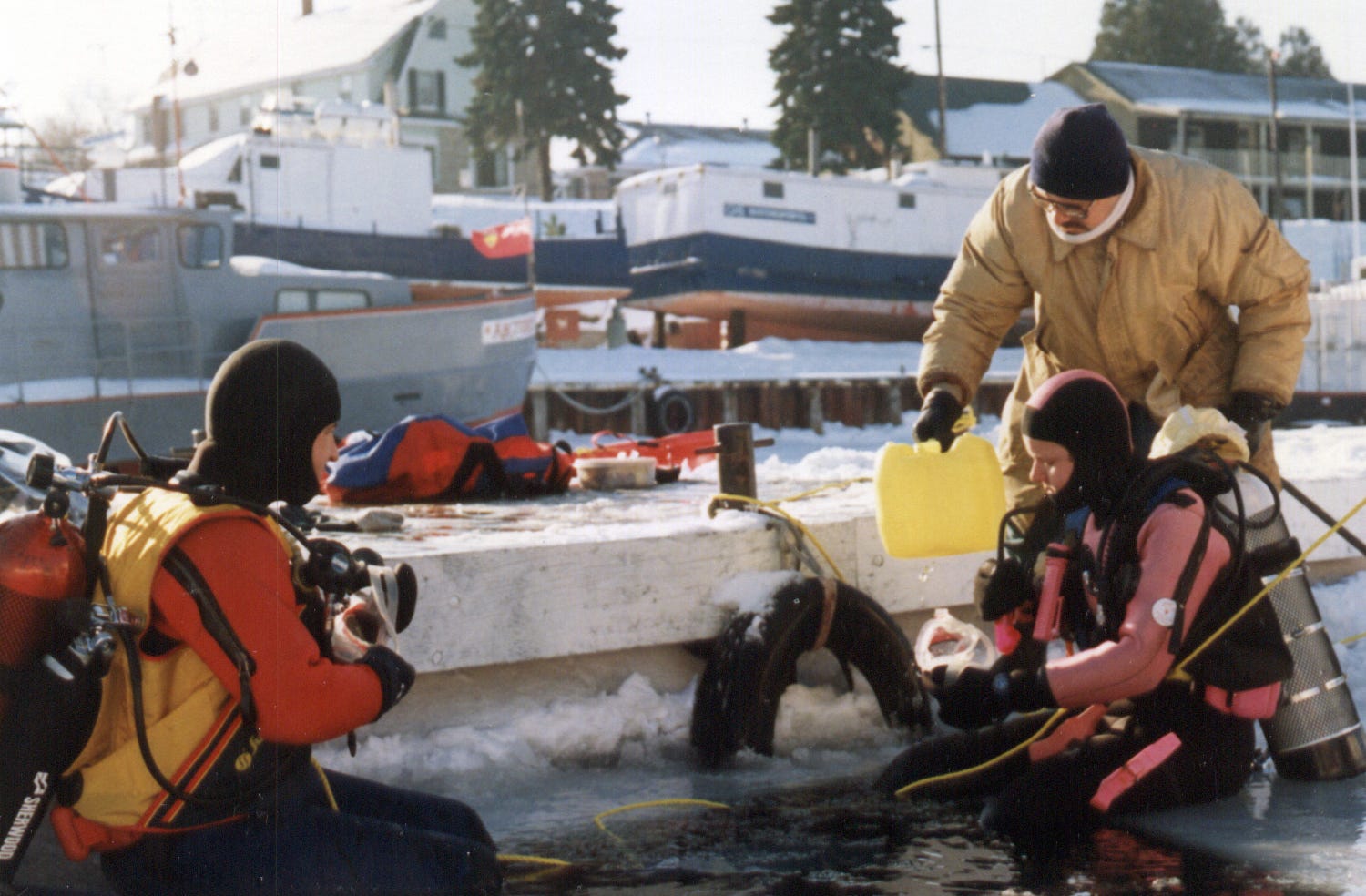
She's working with project leader and new EC50 awardee, Andre Budziak as well as an old friend, Dale McKnight, seen above right providing hot water for her mask on dives in Tobermory over 25 years ago. That sporty pink drysuit has been long retired and she has ditched the big pink knife on her thigh too!
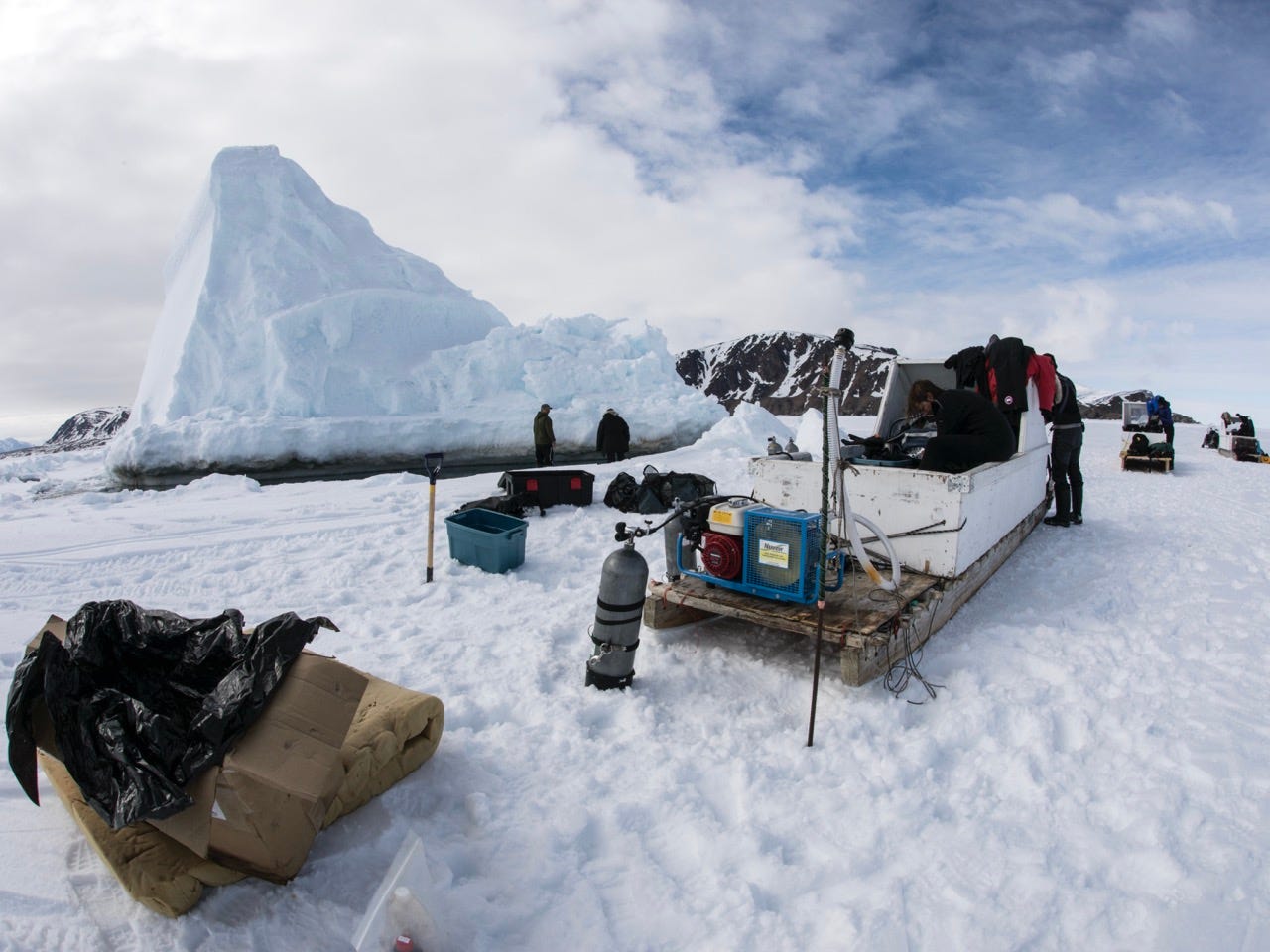
Above: Jill and team specialize in working in extreme environments
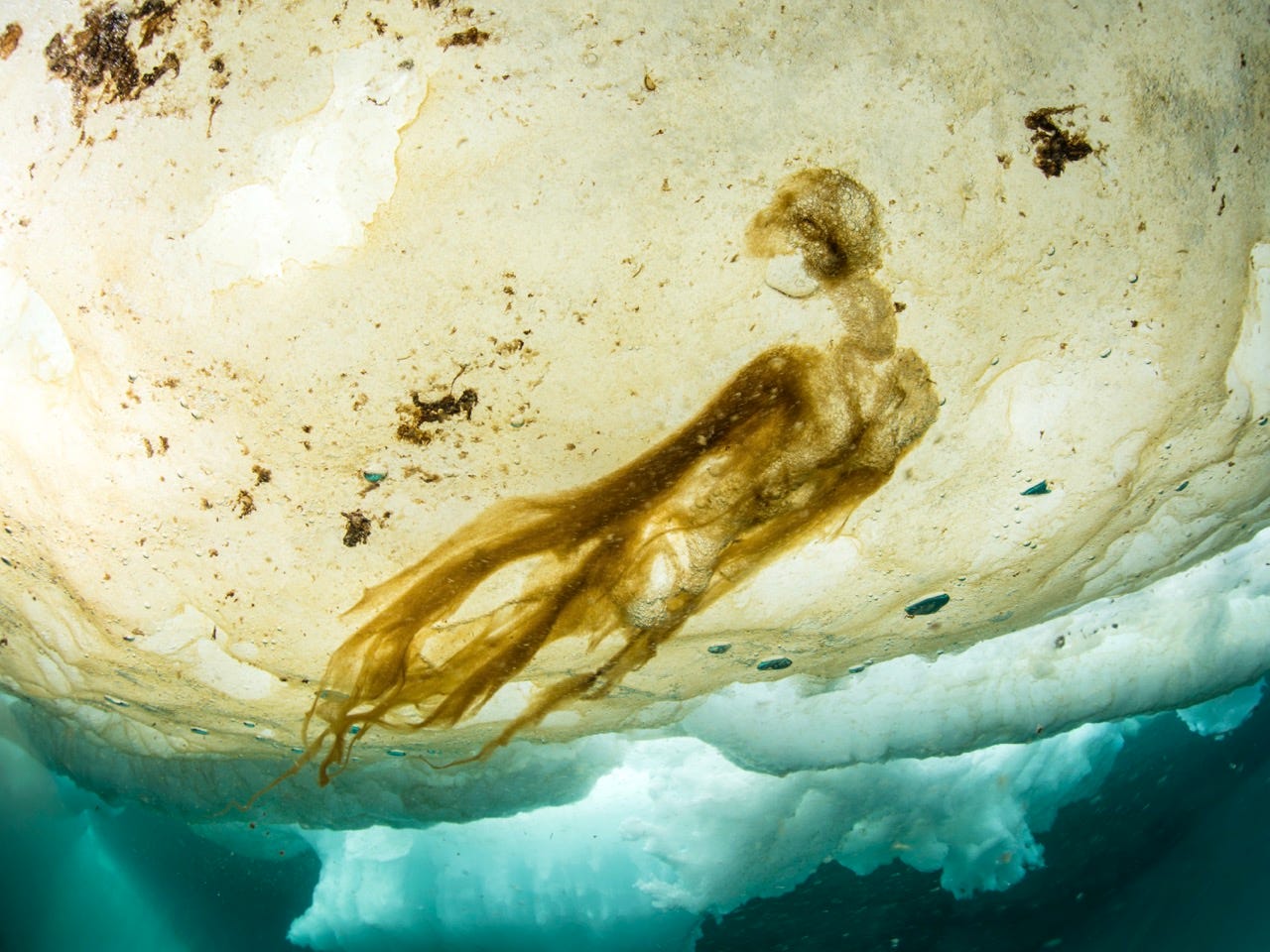
Above: They are sampling algal colonies underneath the ice
Bonus video: Jill just received a wetsuit heater solution. Here’s an unboxing video.
From Robert
I have joined an artist cooperative. I guess this kinda, sorta makes me an artist. I’ve always been shy about using the term “Artist” because I always thought of myself as more of a creative journeyman: I write, photograph, paint, compose, produce, record, and even did a stint as a stand up comedian. I never attended a formal art class. (Although it is debatable if my advanced photography education and instructor experience counts as art) …In the eye of the beholder…and all that. I am, however surrounded by family and friends who have earned degrees in the various fine arts. Jill, much to the chagrin of her engineer father, graduated with honours from the art program at Toronto’s York University. My eldest daughter earned a scholarship and has her degree from the prestigious Goldsmith’s in London, UK. There are a smattering of my friends, nieces and nephews with art educations from establishments as diverse as their local community colleges, to the epitome of Canadian Art institutions: The Ontario College of Art, OCAD. (Several generations of Jill’s family are OCAD alumni). I’ll be posting some of my “Artist Provocateur” work in future newsletters.
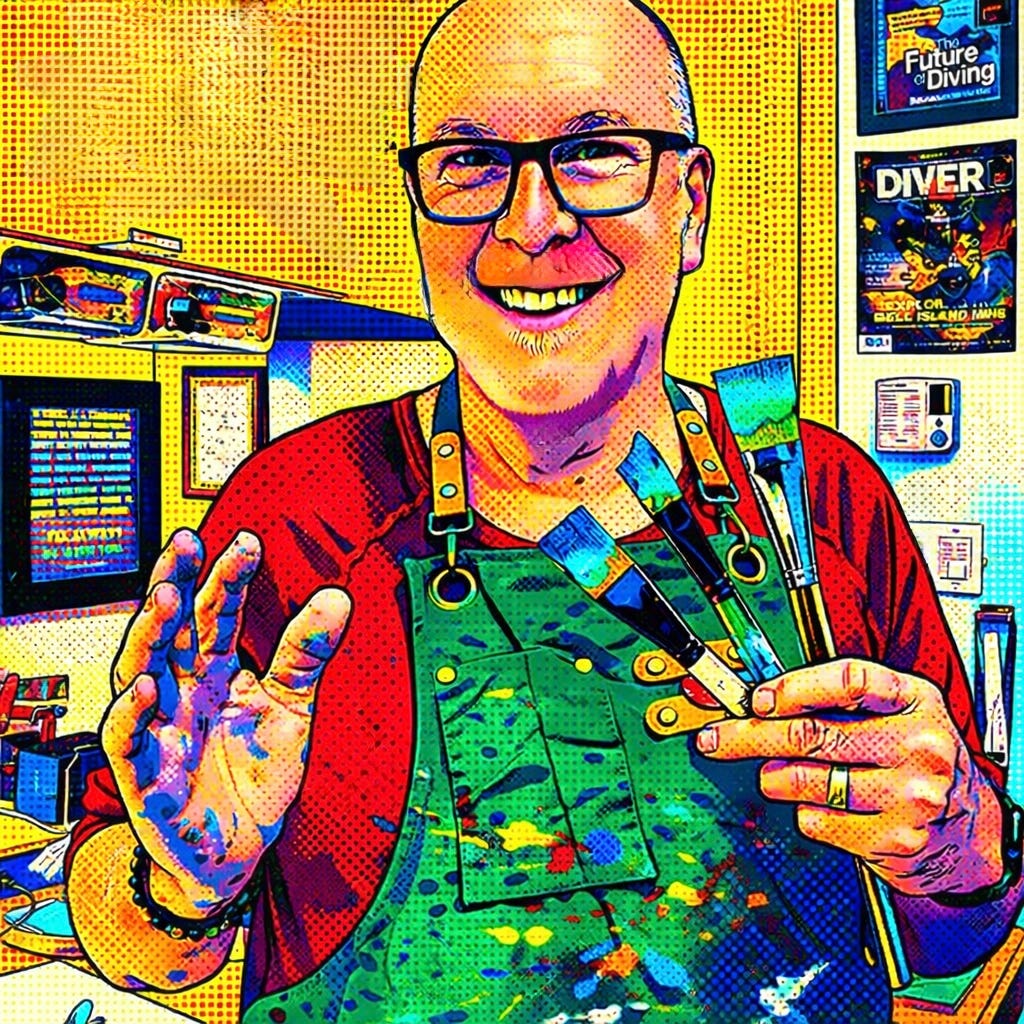
With apologies to the estate of the late, great Roy Lichtenstein, I’ve created a digital pop art rendering of your boy in Artist Mode. My online portfolio is at www.RobertMcClellan.com
We live near the world’s longest skateway - the Rideau Canal at Ottawa, our nation’s capitol. Skating the canal is one of the many ways that Canadians welcome winter time and manage to get fresh air and exercise during the colder months. This is a particularly cold year so the skating season began early and is now in full swing. If you find yourself near Ottawa, please check it out - even if you are a non-skater, walking the frozen canal, enjoying a Beavertail, and admiring the architecture of the downtown area is a great day out. Oh…and you never know who you may run, or skate in to.
If you enjoy our newsletters please share with others. Subscribing is free! Take care, stay warm (or cool) and remember, as weird as things get out there the best antidote to chaos and fear is to LOVE ONE ANOTHER.
Also the suit warmer is intriguing! I think I need one for my dear wife!
I’ve been made to feel like a worry to much! But I don’t care, I check things thoroughly. I don’t do it out loud but I do it! Very good reminder Jill, I am sure those checklists kept you safe all these years of extreme diving!
Robert you definitely are an artist as much as I can judge, at least in visual arts. You are thought provoking and that’s the point of art right?
Enjoy ice-skating, it looks like you will be doing it for a while. I only ice skated a few times in my life, loved it but I am very much dependent of walls to be able to stop. So after I had to throw myself on the ground to avoid colliding with a child, I retired my ice skates! But I imagine it’s fun going down a canal!