

Diving Into Grenada
Grenada: Cradle of Hope
Jill Heinerth
Two volcanic spires rise on the horizon, drawing my gaze as we glide past the oyster beds of Tyrrel Bay, Carriacou, heading toward the submerged wonderland around Mabouya Island. The pinnacles sit just far enough offshore to be at the mercy of the sea, where relentless waves sculpt stark and inhospitable peaks. Jagged, wind-scoured crags sprout improbable sprigs of greenery, the kind of eccentric life Darwin might have wished he’d discovered.
When I last visited in 2016, Sisters Rocks nourished currents that carried life north throughout the Caribbean. Now, fish nurseries are sparse, and the once-vibrant hard corals lie shattered, casualties of Category 4 Hurricane Beryl, the storm that reshaped lives when it tore through in August 2024. And yet, without the context of previous dives, most divers would still call this place remarkable. It has changed radically, but hope remains.
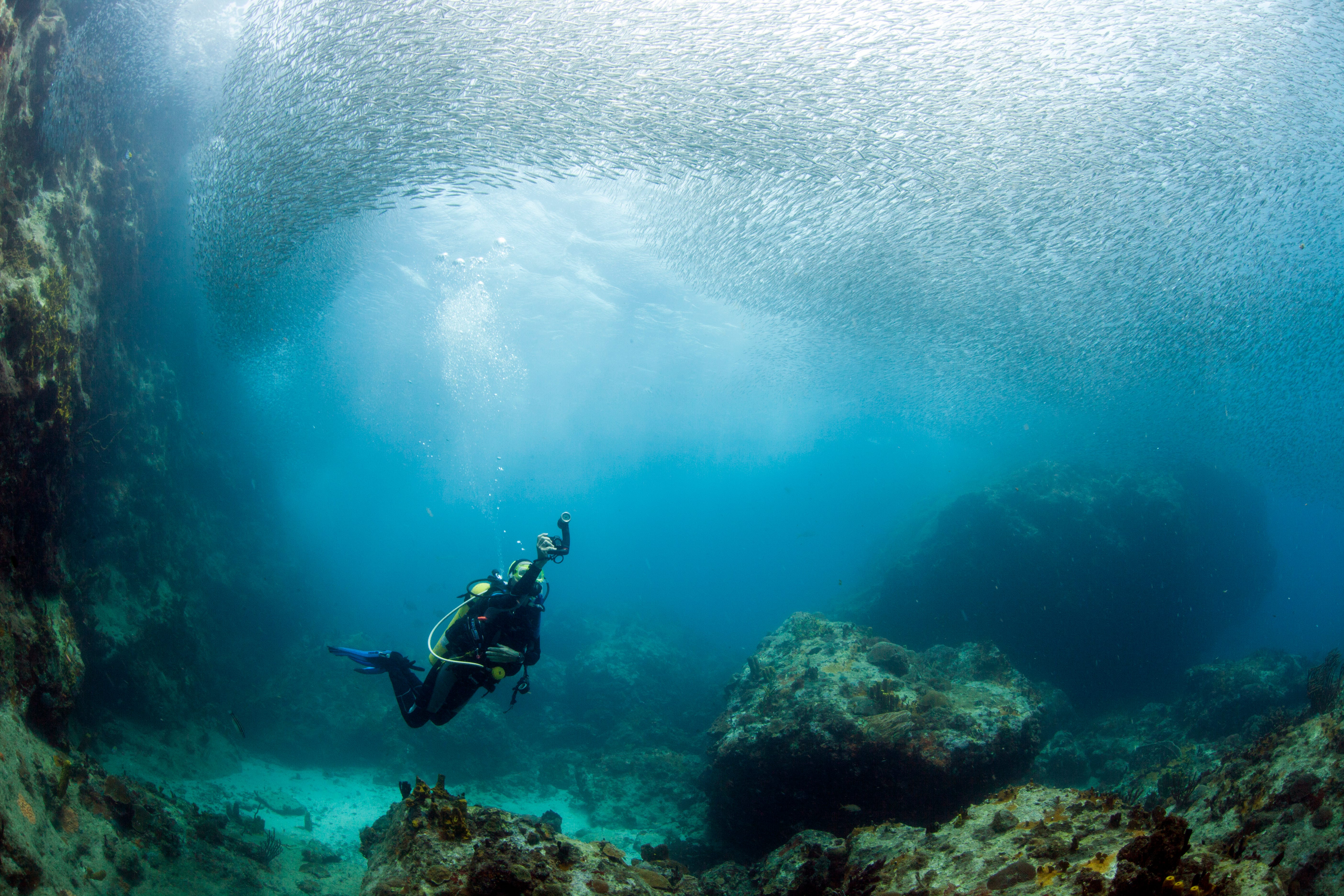
Grenada feels at once Caribbean and South American at heart. Grenada, Carriacou, and Petit Martinique form a three-island nation just 100 miles north of Venezuela, positioned where the Guiana Current funnels 70% of the water entering the Caribbean Sea. Life here is delivered by the ocean itself, passing through the Grenada, St. Vincent, and St. Lucia passages before sweeping northward.
I was invited back to Grenada to take part in the 2025 Dive and Conservation Festival, an opportunity to witness both the successes and struggles of marine stewardship while connecting with teachers, students, and tourism leaders. These conversations felt like seeds being planted. Young students in starched shirts and pleated uniforms listened intently, notebooks poised. One girl, especially focused, filled page after page with information and contacts, perhaps already envisioning herself as a future guardian of the reef.
Back in 2016, after diving Sisters Rocks, I wrote for DIVER Magazine: “The flow catches us, and we join a current that whisks us past giant soft corals, sea whips, and bountiful gorgonians. Above us, purple creole wrasse rain down through crystalline water. We are engulfed in a cloud of vibrant baitfish as a small shark zips below, finding refuge beneath an overhang. There are moments underwater when we are no longer visitors, but part of the ocean’s living tableau.”
As I walked through Grenada on that trip, I felt the innocence and trust that still defines the island. There is a barefoot, leave-the-door-open sense of comfort here, a feeling that has long vanished from many Caribbean ports where security concerns overshadow an otherwise perfect holiday.
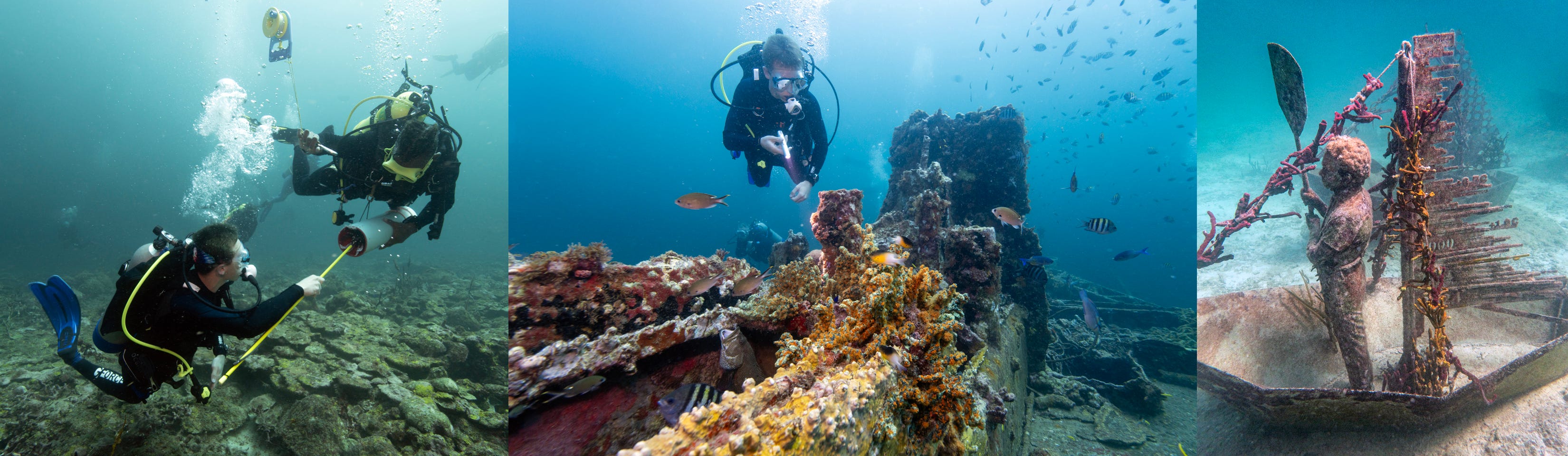
Above: Lionfish hunting, the wreck is a magnet for life, sculpture with a sail made of years and ocean temps.
While Grenada remains famous for its underwater sculpture parks and shipwrecks, on this visit I expanded my narrative by planting mangroves, cleaning beaches, and trekking through the night in search of endangered frogs and tree boas. Everywhere I went, people were taking action. From sea moss farming to coral gardening to culling invasive lionfish, conservation isn’t a specialty here. It’s a habit.
In 2016, the abundance of fish and thriving reefs convinced me this was the cradle of the Caribbean. Now I understand it is more than a nursery of marine life. It is an incubator of ideas, solutions, and hope. Even after their darkest day in August 2024, Grenadians reopened shops, rebuilt, and returned to the water, determined to shape a better future.
Tucked behind a protective sandbar, we dive into the newest underwater sculpture park by artist Jason deCaires Taylor. “A World Adrift” spotlights the vulnerability of Small Island Developing States (SIDS). Thirty sculpted boats, each “captained” by a local schoolchild, are cast in marine-safe concrete and stainless steel. The simple origami-like boats mirror the fragility of island ecosystems. Sponge bouquets already bloom across the hulls and figures, drawing fish into the artwork. New color. New shelter. New life. Proof that when given the chance, the ocean knows how to heal.
And healing is everywhere. Trumpetfish tuck into waving gorgonians. Cowfish nose curiously through the rubble. Spotted drums flutter and pace like nervous dancers in celebration. Children I met in 2016 are now carving their own paths as marine biologists, guides, and educators, carrying forward the legacy of stewardship as the currents sweep their island’s gifts northward to distant shores.
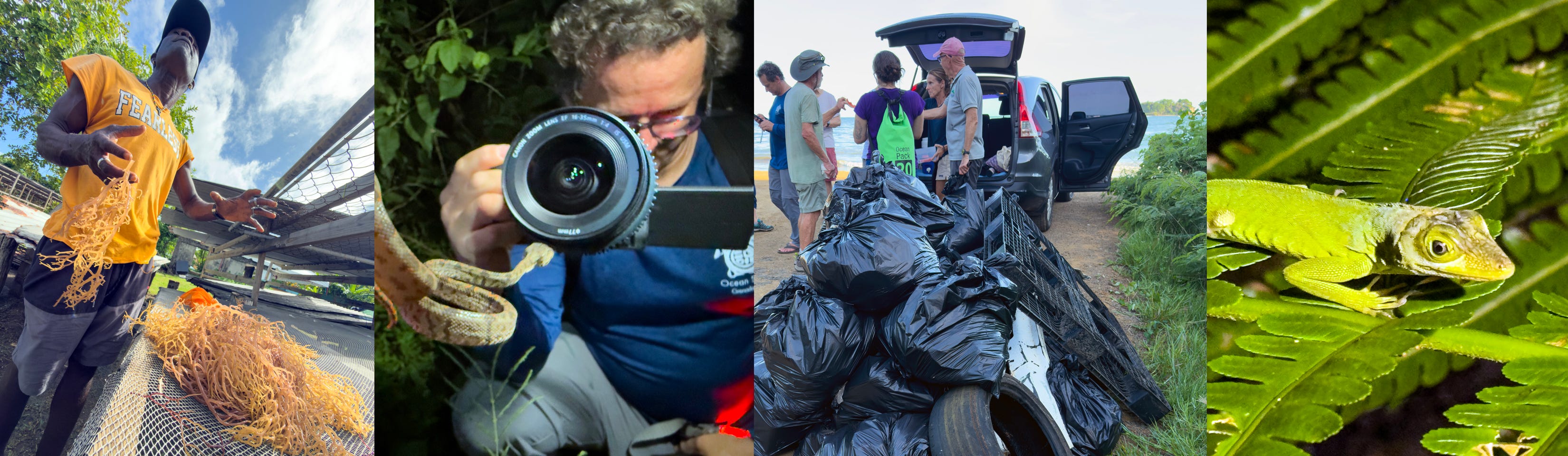
Sisters Rocks may no longer look the way they did a decade ago, but neither does Grenada. What has changed beneath the waves mirrors what is rising above them: resilience. Here, hope is not an abstract concept. Leadership is practiced daily, from hands planting corals to students filling notebooks, and by a community rebuilding with the sea at its back.
Grenada is still the cradle of the Caribbean. But now it is also a cradle of possibility, where hope is cultivated, resilience defines the shoreline, and the future is shaped by those who rise to meet the tide. In every act of stewardship, Grenada lights the way for the world: a beacon that proves the ocean and its people can renew themselves, no matter what storms may come.
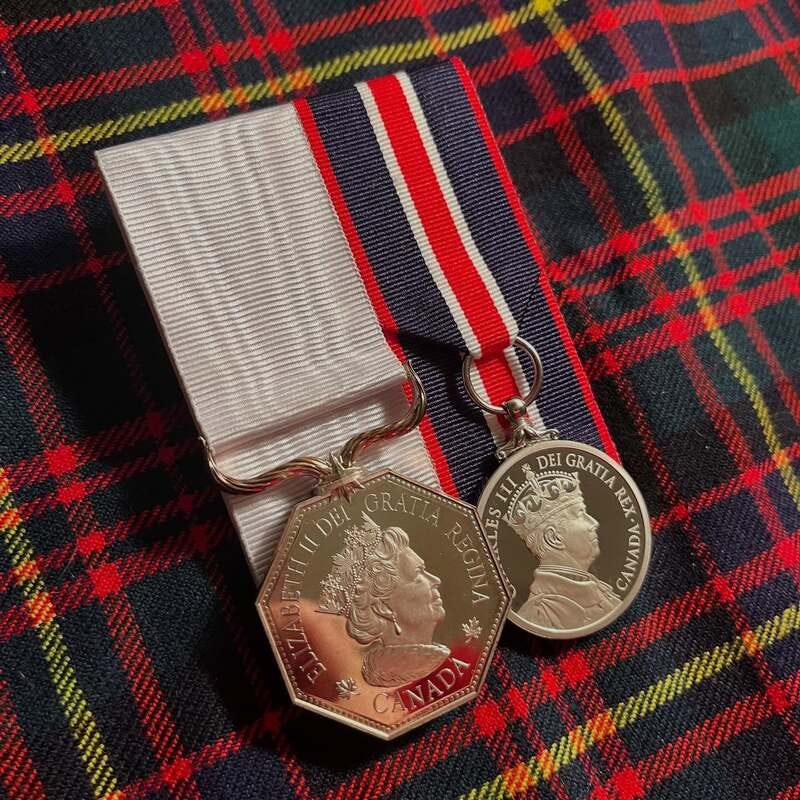
Above: Polar Medal & King Charles III Coronation Medal
A note from Robert
Jill can be reluctant to share her accolades, but I am very proud of her and in awe of so many of her accomplishments. She has recently been recognized by The Crown* honouring her exploration, scientific and educational work in the polar regions. Only 32 people have ever been awarded The Polar Medal. Criteria: Individuals who have provided outstanding service in support of scientific research and/or polar exploration relating to Canada or to Canadian interests whether their work concerns the North or South poles. As well, whose achievements contribute to preserving northern culture and heritage, or to securing Canada’s northern sovereignty.
*The Prime Minister is the Head of the Canadian Government, and the Monarch – currently His Majesty King Charles III – is the Head of State.
From Robert
This week’s musical nugget: Florence and the Machine
I first heard of Florence and the Machine about 2008 when their debut album containing the hit single “Dog Days Are Over” was released. I found the song, and most of the album “Lungs” from which it came very original and refreshing. Fast-Forward 17 years and their newest album release “Everybody Scream” has made me perk up and pay attention once again. Fronted by singer/songwriter Florence Welch with songwriting help from long-time creative partner Isabella Summers, this band’s unique sound and style are head and shoulders above the auto-tuned drivel that passes for popular music today. And Florence herself is a performing powerhouse reminiscent of peak Stevie Nicks or Annie Wilson. (And I am pretty sure she may be the leader of an underground witches coven). Here they are with a recent performance on the BBC Graham Norton chat show:
You can find Florence and the Machine’s music here.
As winter begins to nip at our noses here in Canada, we hope that you and your loved ones are safe and warm. Or cool as a cucumber Down Under. Now, go out into this wild world and LOVE ONE ANOTHER!
Thanks Cathie!
Thankyou for your eloquently written update Jill. We see damage and recovery here in Cairns from cyclones and storms. Nature can recover and we can assist! Education to the next generation is key
And yes things are hotting up Down Under!