

Scuba Diving In Cold Weather
Staying Warm for Winter Dives
Jill Heinerth
If you’re diving in a drysuit, staying warm starts with wearing the right layers. Think of it like getting dressed for winter; each layer has a job to do, and together they keep you comfortable underwater.
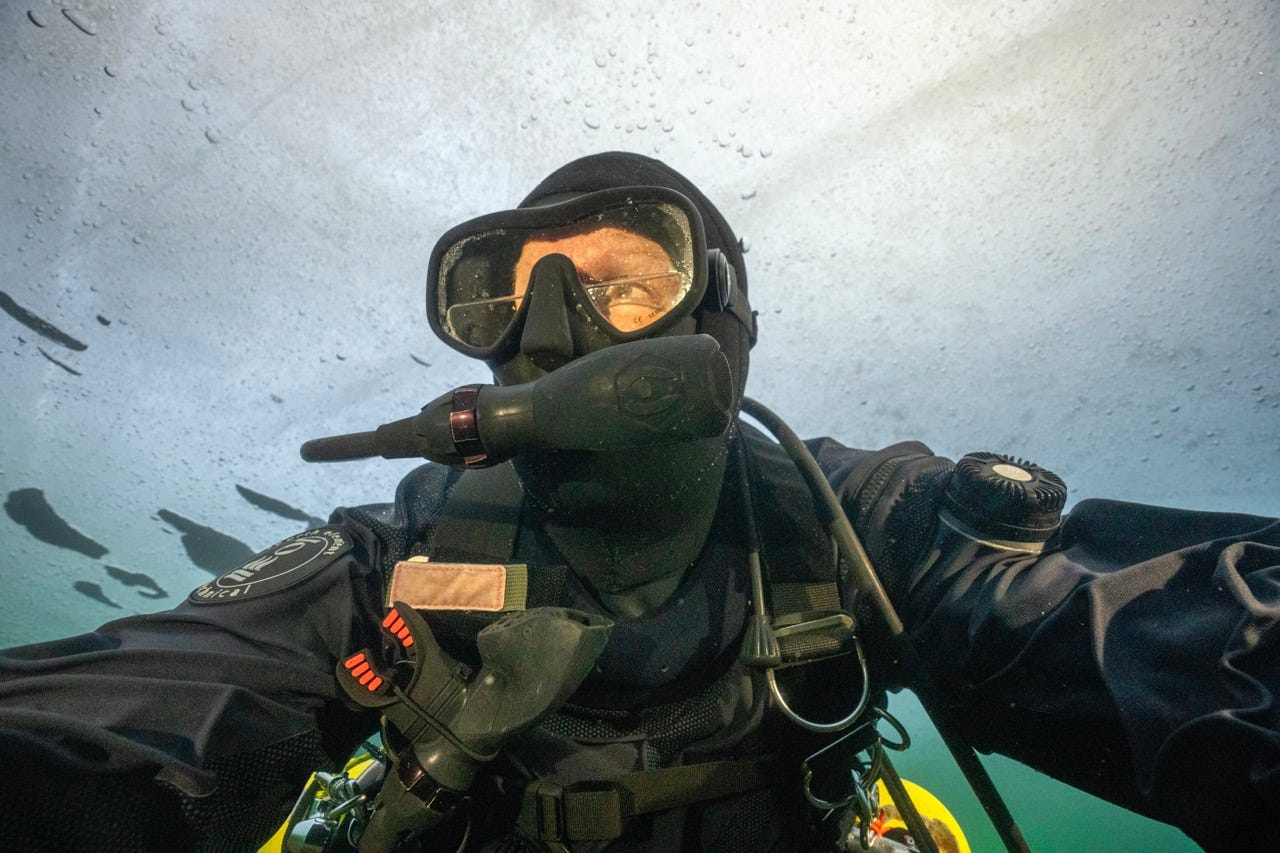
Here’s the simple three-layer system:
• Base layer: This sits next to your skin and is often made of polyester or polypropylene. Its main job is to move sweat away from your body so you don’t get chilled by damp fabric. Fourth Element J2 undergarments (Confession: I am supported by the brand, but am a true believer) are the gold standard in this category, and Patagonia Capilene base layer garments are a good choice, too. Just never choose cotton for the layers closest to your skin.
• Insulating layer: This is where the warmth comes from. Materials like merino wool, fleece, or microfibre trap heat and keep it close to your body. Specially engineered garments made with Aerogel, such as the Fourth Element Halo AR, offer phenomenal insulation properties in a thinner, less buoyant undersuit. The wind- and water-repellent stretch outer layer is also useful, since you may be standing in the elements with your dry suit open to the waist. Remember that technical undergarments should provide warmth even if your suit is flooded. This is one of the reasons to invest in comfort and safety.
• Shell (your drysuit): The suit itself creates a layer of air around you, which helps slow heat loss further and protects you from the cold water. Ensure it is large enough to accommodate your layered undergarments plus room for movement and insulating air. Neoprene offers the best insulation, but it will require a lot of weight to sink. Technical laminated drysuits are the norm today in most situations, and they are lighter weight for travel.
The thickness of your insulation depends on a few things: how cold the water is, how easily you get cold, and how active you expect to be during the dive. A relaxed drift dive or scooter run, and a hard-working wreck dive may call for different setups, even in the same water temperature. Remember, a tight drysuit (“cave-cut”) that crushes your undergarment will not be as warm as one with more room for air.
Some divers choose electrically heated vests or undergarments for extra comfort, especially on long or cold dives. These can be great, but they need to be used thoughtfully. First, never use an electrical device that was not purpose-built and tested for diving. Electrocution and burns have been recorded in divers who used motorcycle thermal gear underwater.
But the greatest safety risk comes from how you use your heating system. Warming yourself too much during the deep or bottom part of the dive can increase inert gas uptake and may raise the risk of decompression sickness, especially if you get cold on ascent, as can occur with a battery failure. A warm dive must be followed by a warm deco. A warm dive followed by cold deco is dangerous.
A safer approach is to keep heated gear off or on the lowest setting during descent and the bottom phase, then turn it up a bit during ascent and safety or decompression stops. That way, you stay comfortable while also helping your body off-gas more efficiently, without overheating any one area. The best approach to using artificial heating is to select a setting that provides comfort without making the heat noticeable.
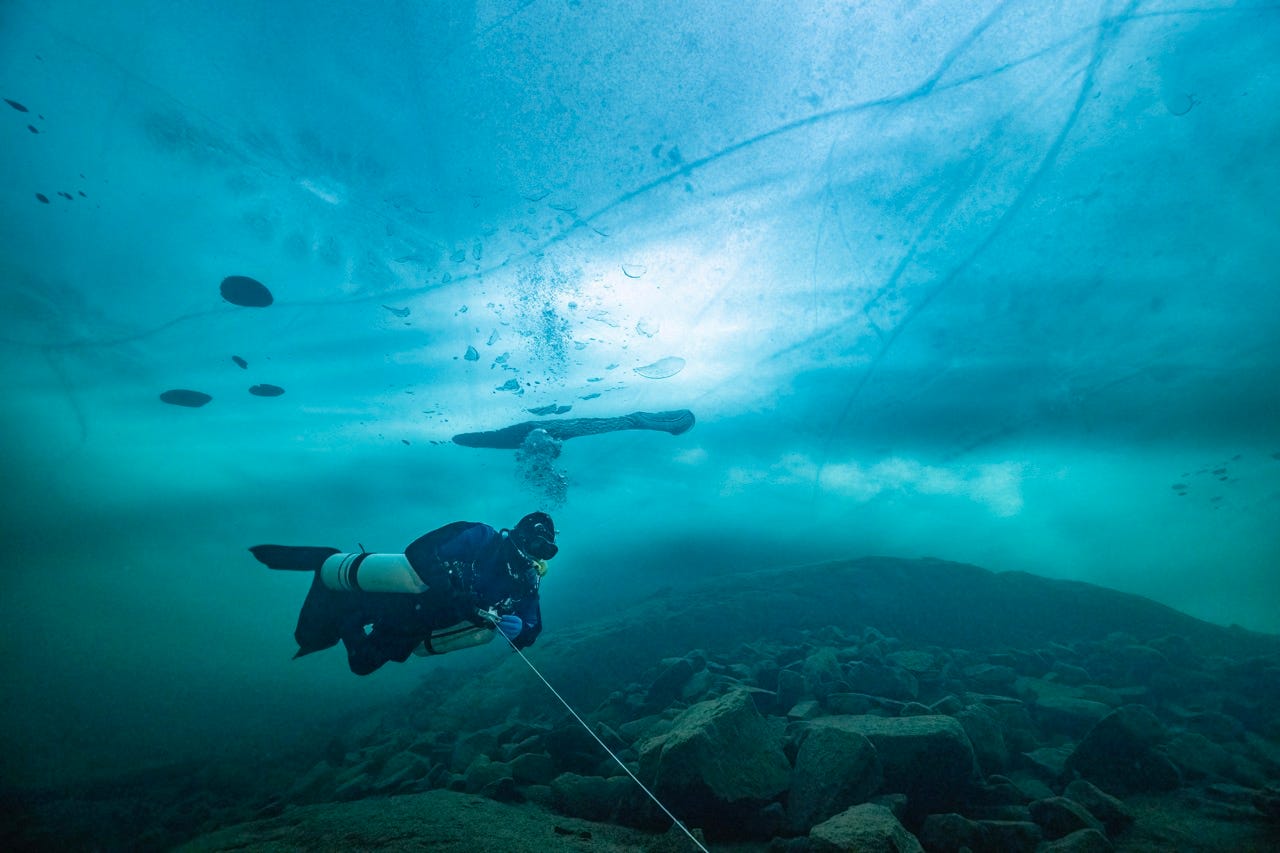
Bottom line: dress smart, plan for the conditions, and use heated gear as a comfort boost, not a replacement for proper insulation.
Other quick tips:
• Place sheepwool insoles in your dry suit boots if you will be standing around on the ice.
• Tuck an extra beanie and light gloves in your drysuit bibs so they will be warm and accessible as soon as you peel out of your suit. Ensure these are extras, since they will get wet.
• Dry everything thoroughly before the next day of diving. Get a strong, battery-operated fan to place inside your suit overnight, or use a boot-drying fan system. I use a Dewalt shop fan powered by my Blacktip scooter batteries that don’t get used much in winter in Canada.
• If you are using artificial heat, plan your dive and undergarments to account for the fact that your system may fail.
• Use a changing poncho if you will be out in the elements while undressing after the dive.
• Use pull-on, waterproof, winter boots for easier dressing and undressing after the dive. Bring along extra socks in case yours get damp during the dive.
From Robert:
The way to some girl’s hearts is with jewelry, diamonds, and pearls. The way to other girl’s hearts is with hardware, nuts, and bolts.
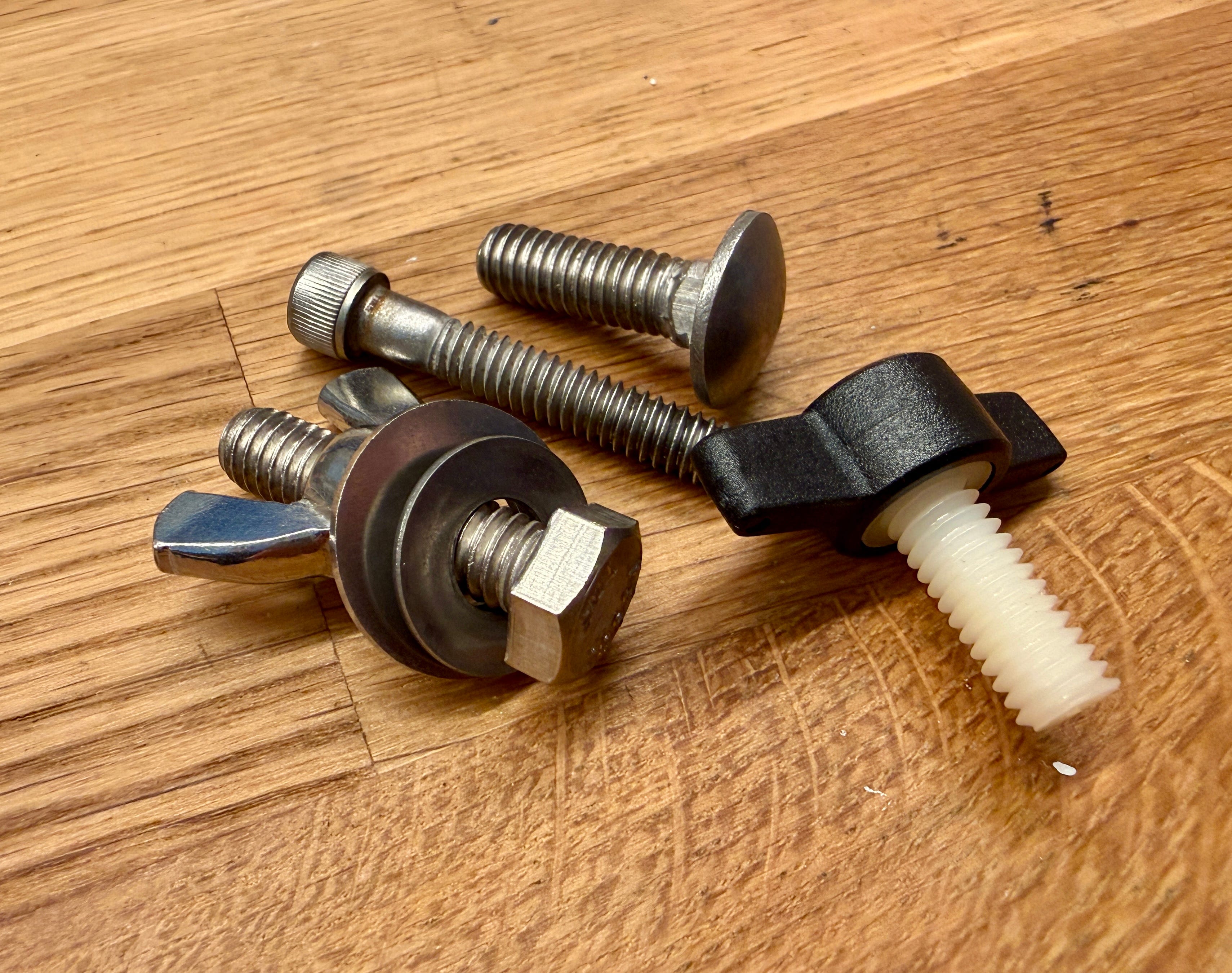
Jill and I made a drive over to Ottawa Fasteners at Bell’s Corners and I think Jill found her new favorite store! Her face lit up as she navigated through bins upon bins of specialty, hard-to-find hardware. I am a lucky guy.
So, You are Canada Curious
From Robert
We have been hearing from many of our American friends who are “Canada Curious.” Our move from the U.S. to Canada eight years ago was not typical - Jill is Canadian, and as such it was easier for her to come back to her home country, and through family sponsorship I earned permanent residency and eventually Canadian citizenship.
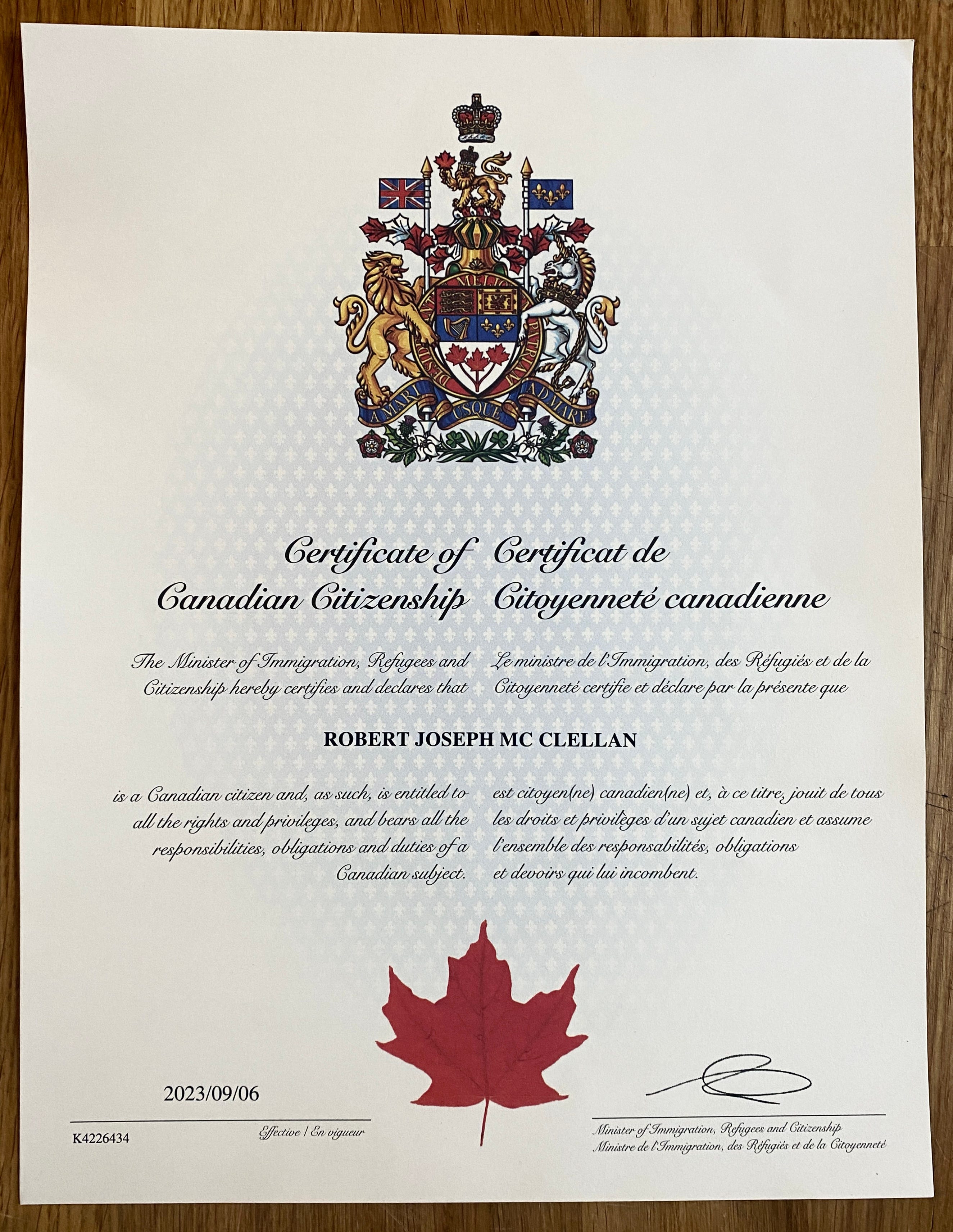
Immigration to Canada is somewhat restricted, based on merit, and the skills a person can contribute to our communities. If you possess certain “in demand” skills and experience, you may qualify for Immigration Canada’s “Express Entry” program. This is one of the shortest routes to permanent Canadian residency. According to Immigration Canada, the following are in demand:
French-language proficiency
Healthcare and social services occupations
Science, Technology, Engineering and Math (STEM) occupations
Trade occupations
Agriculture and agri-food occupations
Education occupations
Physicians with Canadian work experience
More specific information can be found at Immigration Canada’s website:
If you are a healthcare or medical worker - every discipline from physicians and nurses, to therapists and technologists - you may want to look into a new healthcare information resource called “Healthcare Infusion.” This is a volunteer run, private effort to help American healthcare workers find employment and permanent residency in Canada. It started with Tod Maffin in British Columbia. He and his wife Jocelyn are currently spearheading a national movement to recruit healthcare professionals to communities across Canada. This has grown beyond BC and has volunteers who have created Healthcare Infusion sites in most provinces: https://engageq.notion.site/infusionhosts
If this interests you, please watch as Tod explains -
The short version is: We need healthcare workers in Canada. We would love to have you. We honour your lifestyle, culture, ethnicity, family status, and all the other things that make you who you are. We have the most educated population in the world and we live the values most others aspire to. We also have a safe, functioning society that is a great place to raise your children or in which to fulfill your dreams.
By the way, we are officially a French/English bilingual country, but in most of Canada you are fine speaking only English. (They even understand my Rocky Balboa Philly accent). If French is your preferred language you will do great in Quebec, some parts of Atlantic Canada, and everywhere if working for the Federal Government.
We appreciate you joining us via this newsletter. We’d like to encourage you to share it and suggest that your friends and colleagues subscribe. Take care of yourselves, and don’t forget: LOVE ONE ANOTHER!
I love these tips. Did not even think about the temperature change ans dci risk if colder at end of time. My favourite garment is also the fourth element Arctic thermal layer. I laughed out loud at Roberts nuts and bolts gift comment. So funny. Great read !
Another excellent article - thanks for sharing your knowledge with us, Jill.
Robert, an interesting (and judicious) choice of topic. Expertly and tactfully written. And... timely given current events. Bravo.
And thinking about it... Funny to invite 'good people' to move to Canada while Jill writes about cold-water and ice diving... lol